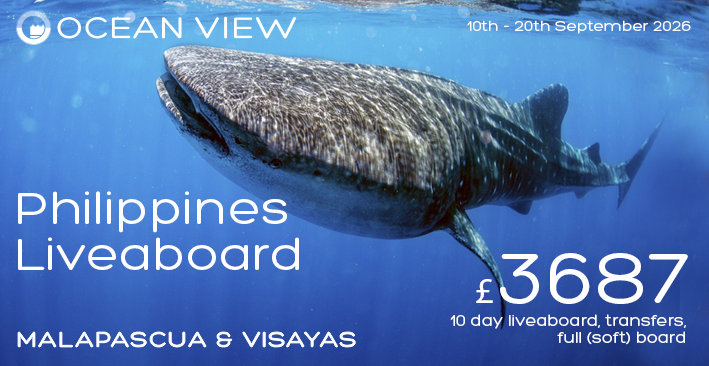
The Philippines is a place of natural wonders and is rich in biodiversity.
This fantastic 10 day liveaboard takes you to some amazing dive sites.
10th to 20th September 2026
Includes:
- 10 day liveaboard
- Upto 4 dives per day
- All food and soft drinks on board
NOT included:
Please note, this does not include flights.
Cost: £3687 per person – £750 deposit to secure your space
Please note; this does not include flights.
If you are interested in the trip please let us know, we will give you the details of the arrival airport and required arrival times etc.
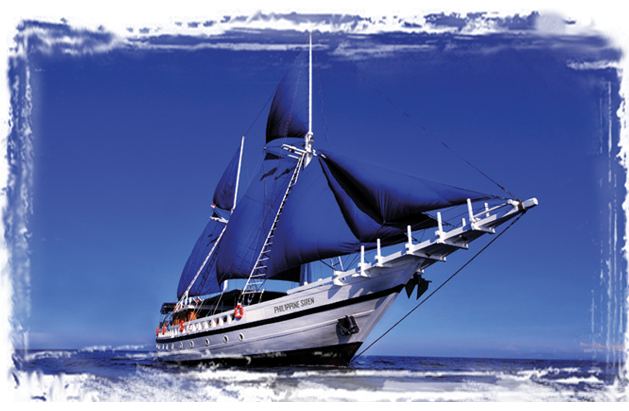
The Vessel…
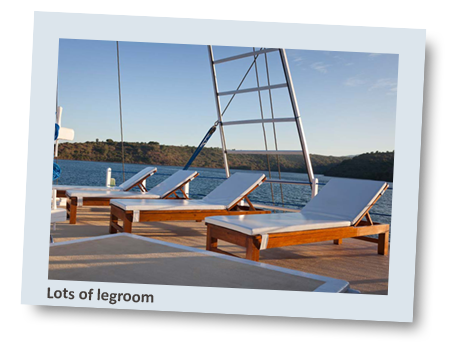
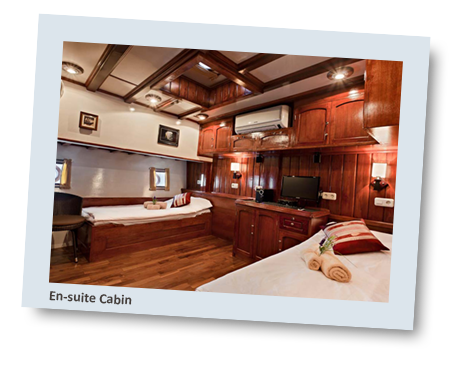
S/Y Philippine Siren is a 40m phinisi yacht with comfortable accommodation for 16 guests. Classic or Premium en-suite cabins are available, all with air-conditioning and personal entertainment systems. Towels and robes are provided as standard, while each cabin includes a safe. Also, the cabin design maximises flexibility, to meet the needs of guests and group bookers. Shipmates enjoy mouth-watering meals alfresco. To relax, there is an indoor lounge with comfortable sofas, plasma screen and cocktail bar. There is an upper sundeck with lounge chairs to relax in too.
On board water makers supply clean, safe, drinkable water. Centrally-heated hot water is delivered, on demand, to guest cabins and deck heads.
The dive deck is spacious and set up to make diving simple. Plus, there are all the facilities necessary for underwater photographers. Nitrox is provided through our membrane system and all diving activities are supported by two RHIBs that remain on stand-by to support and assist you.
Built on the Indonesian island of Sulawesi, S/Y Philippine Siren is handcrafted from ironwood and teak (traditional to the area). You will find no other diving liveaboard in the Philippines of equal beauty. With capacity for 16 guests, there is ample space to relax. The 3 double and 5 twin cabins offer air conditioning, personal computers, entertainment system and ensuite bathrooms with hot water. Unwind and relax after a fantastic day of diving in the indoor saloon which offers a cocktail bar and bar with a 42 inch flat screen TV.
Your holiday in paradise includes:
This package includes: 10 nights full (soft) board accommodation on board S/Y Philippine Siren.
Full-Board meal plan, tea, coffee, soft drinks, snacks. Diving Package, Land Excursions, Cabin Towels, Complimentary Toiletries, Deck Towels.
Required Extras: National Park Fees (75-160USD)
Optional Extras: Gratuities, Local Flights, Alcoholic Beverages, Nitrox (100-130 USD),
Private Dive Guide, Rental Gear, Laundry/Pressing Service, Massage.
Minimum dive certification and experience
Diving conditions in and around the Visayas are generally suitable for all levels of divers although some sites can be challenging for inexperienced divers due to currents.
Divers wishing to join this itinerary are advised to have Advanced Open Water certification, or equivalent, with a minimum of 10 logged dives and experience in strong currents.
It is a mandatory requirement for all divers to have insurance which covers scuba diving activities, including emergency evacuation and recompression chamber costs.
Malapascua
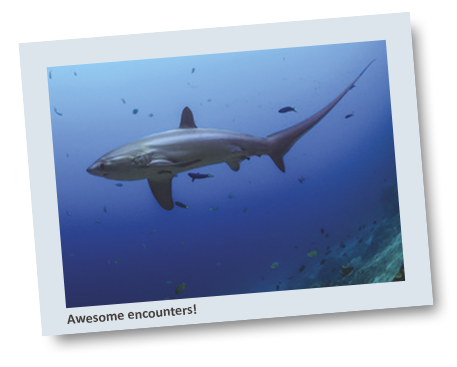
There are numerous dive sites off the shores of Malapascua Island and the surrounding areas which offer a variety of dives and potential marine life encounters. The shy and elusive thresher sharks* are one of the main attractions at several locations, along with sea snakes, reef sharks, rays, and a huge array of macro critters.
PLEASE NOTE: the dive sites below are just an example of the route taken and are not guaranteed. All dives sites are subject to weather conditions and local seasonal knowledge and the final route taken is at the absolute discretion of the captain and dive guides.
*PLEASE NOTE: The use of strobes and flashlights is NOT permitted when diving at locations where thresher sharks are present.
Some Itinerary Highlights…
Kimud Shoal
Located southeast of Malapascua Island, along the same trench as Monad Shoal, Kimud is a small sunken island with a top covered in patches of hard coral at depths of 12-16 m (40-52 ft) and steep sides extending down to more than 200 metres. The endangered, pelagic thresher shark regularly visits this area to be cleaned by several species of cleaner wrasse. Other pelagic visitors include mobulids and tuna while the corals and overhangs provide hiding places for a variety of shrimps, moray eels and frogfish.
Gato Island
Located less than 2 hours away from Malapascua Island, Gato provides a diverse range of marine life and underwater topography; White tip reef sharks seek shelter under bommies a plethora of macro critters command the sea floor, and cuttlefish can be seen performing their mating rituals when it is the right season. There are several sites around the small island and we choose from the following:
White Tip Alley
As the name suggests provides an almost guaranteed sighting of white tip reef sharks that enjoy their rest on the sand tucked under rocks and coral bommies. Other species found here include scorpion fish and seahorses. Whip coral shrimps which cling to the colourful whip corals adorn the overhangs of this Alley.
Nudibranch City
Rubble, rocks, sponges and corals provide a perfect habitat and create an “Undersea City” for a plethora of nudibranchs and flatworms including Blue dragons, chromodoris, hypselodoris and flabellinas.
The Tunnel
Running underneath Gato Island at a depth of approximately 20 metres, the 30 metre long tunnel takes divers from one side of the island to the other. Keep a lookout for resting white-tip sharks or use your light to search for lobsters and crabs that like to dwell within the cavern.
Chocolate Island
The topography of this little island is typical of the area around Malapascua with shallow reef tops full of soft corals and algae that are home to a variety of nudibranchs as well as eels and sea snakes. The shallow bottom (16 m/50 ft) around the island is the perfect place to find odd-shaped bottom dwellers such as bearded scorpionfish, devil scorpionfish and dwarf cuttlefish as well as different kinds of sea stars, sea urchins with urchin clingfish inside, black velutina snails and ringed pipefish.
Moalboal, Cebu
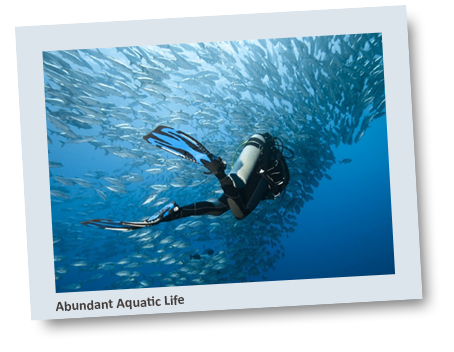
The main attraction of Moalboal is the millions of sardines hanging out in the shallow waters. Other than that the beautiful diving around Pescador Island is just 30 minutes away.
Panagsama Beach
Along with the millions of sardines performing their swaying dance around the reef drop-off, giant frogfish can often be found pretending to be a sponge together with green turtles, sea stars and pipefish along the reef.
Tongo Point
Schools of razorfish, crocodile needlefish, purple and threadfin anthias are to be found while reef squids and spade fish are making their way home. Green sea turtles and hawksbill turtles are also commonly seen here.
Turtle Bay
This site is often scheduled for night dives where we can spot sleeping turtles along with different kinds of crabs and shrimps.
Dolphin House
Crocodile needlefish, drummers, milkfish and yellowtail barracudas are living just under the surface while millions of damsels and anthias are darting around the coral reef top.
Pescador Island
Just 30 minutes away from Moalboal, Pescador is the perfect place to explore dramatic steep walls and the vibrant, lively reef top. Colourful damsel fish, anthias and chromis dart amongst the corals while schools of fusiliers, red-tooth triggerfish, surgeonfish, long-jawed mackerel, juvenile convict fish and big-eyed trevallies fill the blue. Pescador is also home to some giant frogfish and a big cave known as the Cathedral on the northwest side adds some dramatic photo opportunities to this beautiful island.
Dauin, Negros
Dauin, with its black volcanic sand, is famous for its muck diving and fabulous macro creatures. Depending on the season, different types and sizes of octopuses, sea horses, frogfish from minuscule babies to full-grown adults, a variety of ghost pipefish, and flamboyant cuttlefish can be found.
The Cars
Perhaps rather unimaginatively named, the main attraction of this dive site is the artificial reef created from the chassis of two cars that host an amazing amount of marine life. Surrounded by sand at a depth of 24-29 metres, you will usually find groups of snappers, angelfish, lionfish and sweetlips hanging around the wrecks which, if you take a closer look inside, have also created a perfect environment for an array of crustaceans. On the sandy slope that leads to the wrecks, the keen-eyed are likely to discover no end of macro delights including juvenile frogfish, robust, ornate and velvet ghost pipefish, sand divers, dragonets, flamboyant cuttlefish and much, much more.
Secret Corner
It’s no secret that this sandy, rubble-strewn slope is potentially a cephalopod lover’s nirvana.
Blue-ringed, mimic and coconut octopus, wunderpus and flamboyant cuttlefish are just some of the species that can be found here. Other delights include snake and garden eels, waspfish, spiny devilfish, hairy frogfish and seahorses.
Ceres
This is another fantastic macro site featuring a sandy slope and artificial reef made up of tyres and concrete mooring blocks. Named after the local bus company that donated the tyres, marine life that can be found here includes stargazers, seahorses, a variety of frogfish species, flamboyant and pygmy cuttlefish and ambon scorpionfish.
Mainit
Currents at this location are often strong, so it is usually dived as a one-way drift. Featuring a mix of black volcanic sand with patches of hard and soft corals, fish life is prolific and varied. This lively and exhilarating dive ends in an area with yellow, sulphur-rich, hot sand, hence the name Mainit meaning ‘hot’ in Visayan.
San Miguel
A relatively shallow dive site with sandy slopes, seagrass beds and a small reef full of fish, San Miguel is another critter wonderland! This is the place to find all your favourites including a variety of nudibranchs, ghost pipefish, tiny juvenile frogfish and even the possibility of finding Pygmy Squid, mimic octopus, or newly hatched flamboyant cuttlefish.
Apo Island
Apo Island Marine Reserve is one of the most successful marine sanctuaries established in the Philippines. Reef hooks and gloves are not allowed and night diving is unfortunately not permitted. The order of dives will be based on the currents and conditions of the day choosing from:
Coconut Point
Situated on the northwestern tip of Apo Island, strong currents make for an exhilarating and sometimes challenging dive. Also referred to as ‘The Washing Machine’, this fast-paced drift takes divers over the sloping coral reef to a rock wall; a sandy channel between two cliffs provides an opportunity to take a breather and look out for passing pelagics. Along the way, large schools of trevallies, blackfin barracuda, snappers, sweetlips, potato groupers and plenty of sea snakes can be encountered.
Cogon
On the eastern side of Apo, this is another site that often experiences strong currents and therefore dived as a drift. Starting as a sandy slope that evolves into a coral reef leading to a steep wall, there is plenty of coral and marine life activity to catch your eye as you are carried along by the current. A large school of big-eyed trevally are commonly seen here as well as reef sharks, blue-spotted stingrays and turtles.
The Chapel
On the west side of the island, the reef starts as a gentle sandy slope with scatterings of coral bommies becoming progressively steeper as you get nearer to the wall section which drops off to more than 40 metres. The wall is dotted with small crevices and caverns adorned with soft and hard corals, sponges, sea fans and anemones hosting an abundance of small aquatic creatures. Electric clams, a wide variety of nudibranchs, eels and crustaceans are just some of the delights that await the inquisitive diver. Hawksbill and green turtles can also be found munching on the corals while large predatory fish pass by in the blue.
Rocky Point West
Just beyond the chapel opposite the marine park warden’s office, Rocky Point West offers some of the most stunning hard corals to be found in the region with endless patches of leather corals on the top. The steep reef walls support numerous colourful reef species; pyramid butterflyfish and red-toothed triggerfish can usually be seen here in their hundreds. Frogfish, cuttlefish, banded sea snakes and hawksbill turtles are also common sightings.
Balicasag Island
The small island of Balicasag, just off the tip of Panglao, is characterised by its many turtles, coral gardens and steep walls which provide overhangs, cracks & crevices in which to search for a variety of marine species. This area has been a marine protected area since July 2017 and allows two dives per day only with valid permits.
Divers Heaven
One of the big attractions of this aptly named, beautiful dive site is the hawksbill and green sea turtles that can often be seen here. The shallows comprise a sandy area covered with seagrass which the turtles come to graze on and also has plentiful coral formations, reef fish and macro species. The coral coverage becomes denser and more extensive as you progress further down the steeply sloping reef which reaches depths of 40+ metres and features many ledges and overhangs with lots of soft corals, gorgonians and sponges. Goldband fusiliers, Big-Mouth mackerel, Midnight snappers, Redtooth Triggerfish, Angelfish, Barracuda, Bluefin trevally and Bigeye trevally are just some of the fish that you are likely to see in large numbers along the reef. Leaf scorpionfish are another delight that can be found in this aquarium-like environment as well as numerous nudibranchs, eels and anemone fish.
Black Forest
Named for the proliferation of black corals that can be found at depths that extend beyond recreational limits, Black Forest is well known for its biodiversity and beauty. Often dived as a drift, the reef forms a steep slope with a wide variety of corals and marine life. Damsel fish, anthias, chromis, scorpionfish, wrasses, turtles and more can be found going about their business in and around the corals; in the blue, schools of jacks, blue-dash fusiliers and barracuda are common sightings as well as Titan triggerfish and Napolean Wrasse.
Cabilao Island
There are many interesting and colourful walls and coral gardens around the island of Cabilao; we usually choose from the following:
Gorgonian Wall
Starting at 5 metres and extending to a depth of 60 metres, this 100-metre-long wall is awash with giant gorgonians, corals and sponges. Also featuring many overhangs and small caves, fish activity is plentiful and hidden wonders are waiting for the eagle-eyed to find including pygmy seahorses, frogfish and rare nudibranch specimens.
Lighthouse
So named because the site is in front of the lighthouse on the northwest tip of Cabilao Island, this is a sloping wall covered with seagrass and corals which is often frequented by green turtles. Amongst the corals and sponges, you are also likely to find frogfish, cowrie snails, ghost pipefish, stargazers, Pegasus seamoths, a variety of crustaceans, and electric file clams.
Talisay Tree
Along the northern shore of Cabilao, Talisay Tree is another gorgonian-covered wall with a shallow seagrass garden interspersed with elephant ear and barrel sponges. The site offers some fantastic wide-angle and macro photo opportunities with bubble corals playing host to their commensal shrimps and orangutan crabs.
Cambaquiz
Cambaquiz is a favourite location for a sunset or night dive. Comprising a gentle sandy slope dotted with clusters of soft corals, sea pens and seagrass there is an abundance of delights to be discovered here by torchlight. Stargazers lie camouflaged in the sand while an array of crabs and shrimps can be found hiding in the corals and grassy patches along with seahorses, pipefish and wunderpus to name just a few.
All dive sites are subject to weather conditions and cannot be guaranteed.




Itinerary Details
This is an approximate guide to your liveaboard itinerary.
Number of scheduled dives: Up to 33
The itinerary involves some long-distance travel and, whilst we attempt to ensure the number of planned dives is fulfilled, bad weather and sea conditions can affect the boat’s ability to reach a specific dive site in good time and may impact the number of dives that are possible.
The following is an example of the day-to-day itinerary.
Day 1: Embarkation at 13:00 followed by lunch and briefings. If time allows there may be a check dive scheduled but diving on embarkation day is not guaranteed.
Days 2-9: Your Cruise Director will schedule up to 4 dives per day; 3 day dives and a sunset or night dive. A typical diving day is scheduled as follows:
- Light Breakfast followed by a briefing & Dive 1
- Full Breakfast, relaxation followed by briefing & Dive 2
- Lunch, relaxation followed by briefing & Dive 3
- Snack
- Briefing for Dive
- Dinner
Day 10: Usually 2 morning* dives before Philippine Siren commences the cruise back to the marina.
Day 11: Following breakfast on board, disembarkation is scheduled for between 09:30 and 10:00.
*We kindly request that guests check their flight departure times to ensure that they leave a minimum of 24 hours between their final dive and the departure of their flight.
PAYMENT PLAN
The payment plan is to come, however we will need a £750 deposit to secure your space.